
Home / The Stone / Porcelain & sintered
Porcelain slab fabricator · Connecticut
Porcelain slab countertops, from a Hartford fabricator.
Porcelain and sintered stone are engineered surfaces created through high-heat, high-pressure processes. They are extremely durable, non-porous, and resistant to heat, scratches, chemicals, and UV exposure, making them suitable for both indoor and outdoor applications.
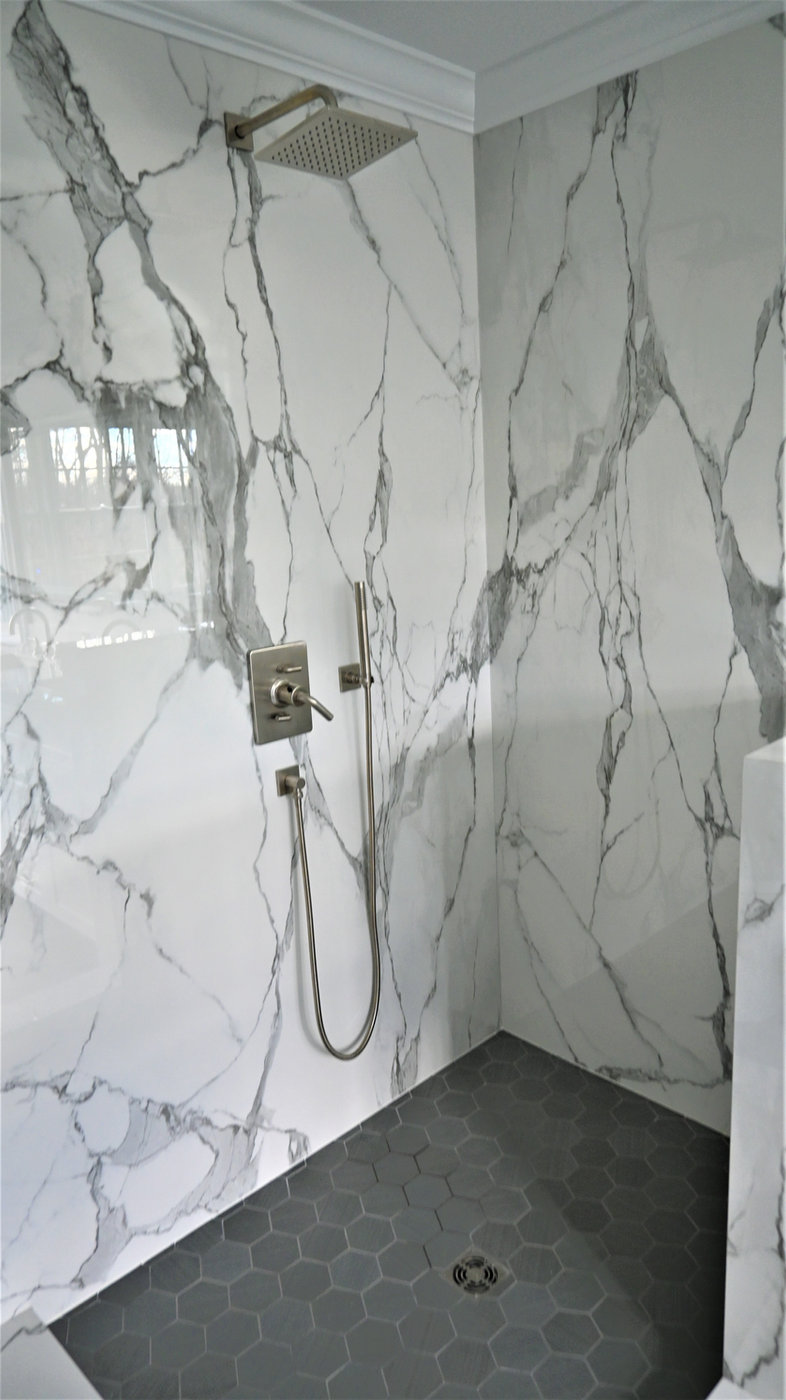
These materials are available in large formats, allowing for full-slab shower walls, outdoor kitchens, fireplace surrounds, and modern designs with minimal grout lines. They come in a wide range of styles, including marble look, concrete look, and solid colors.
At a glance
Why choose porcelain/sintered stone?
- Extremely durable and non-porous
- Heat-, scratch-, and UV-resistant
- Ideal for indoor or outdoor use
- Available in large formats for seamless designs
- Wide range of styles and finishes
Fabrication
Porcelain does not cut like granite.
It is thin, hard, and unforgiving of shortcuts, which is why not every shop takes it on. Ours is cut by the same people who handle our natural stone, on equipment set up for it, at our shop on Airport Road.
- Rounded cutouts
- Sink and cooktop openings need radiused internal corners. A square corner is a stress point, and porcelain finds stress points.
- Handling
- A large-format slab is thin enough to flex. It moves on frames and vacuum lifters, not on a shoulder like a granite top.
- Mitered edges
- Thin material is mitered and bonded so the edge reads thick. The miter has to close cleanly or the joint shows in every light.
- Blades and feed
- Different tooling, slower feed rates, constant water. Rushing any of the three is how porcelain chips.
We fabricate the leading ultracompact lines: Neolith’s endless collections, Dekton’s carbon-neutral surfaces, Laminam’s large-scale architectural slabs, and SapienStone’s kitchen-focused range. Countertops, full-slab shower walls, outdoor kitchens, and cladding get fabricated here and installed by our own crew anywhere in Connecticut.
Porcelain does lose to natural stone on chipping, repair and edge profiles. Our comparison of porcelain and natural stone covers where each one wins.
Also in the yard: Granite · Marble · Quartzite · Quartz · Soapstone
Installed work
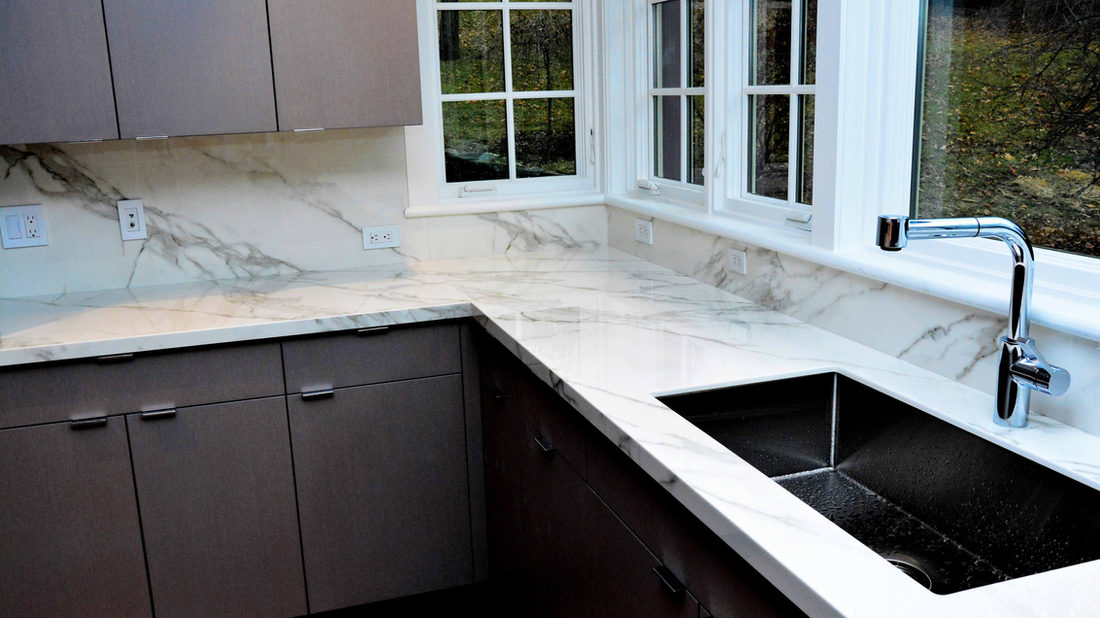
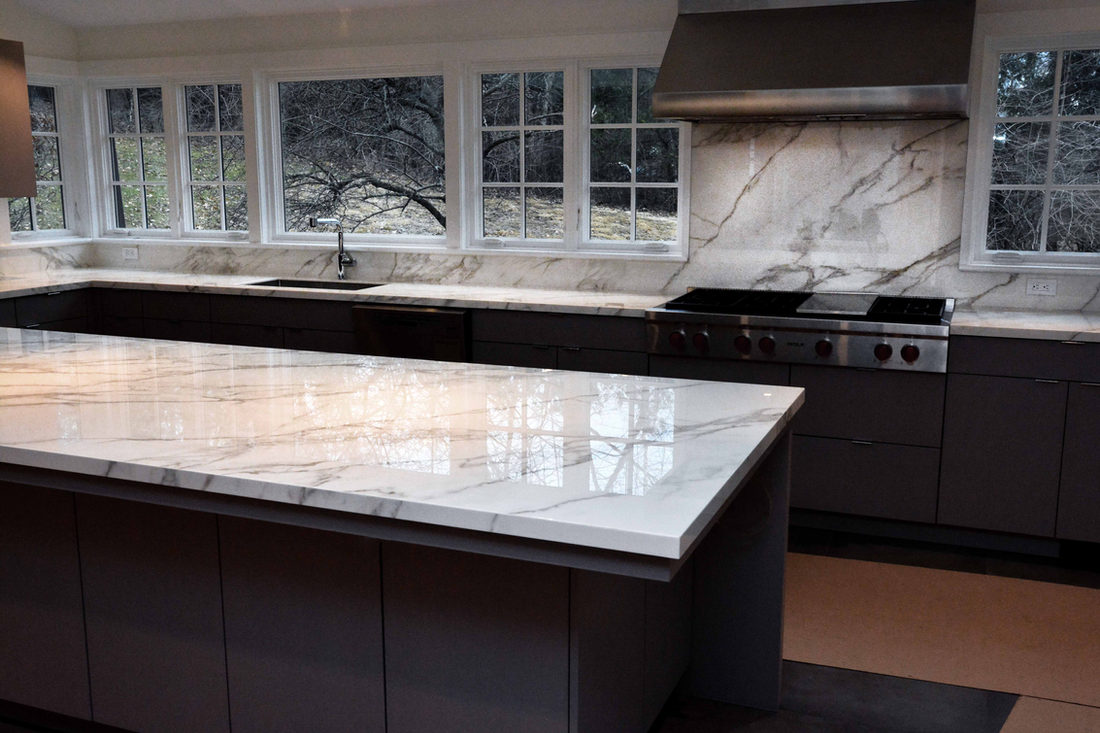
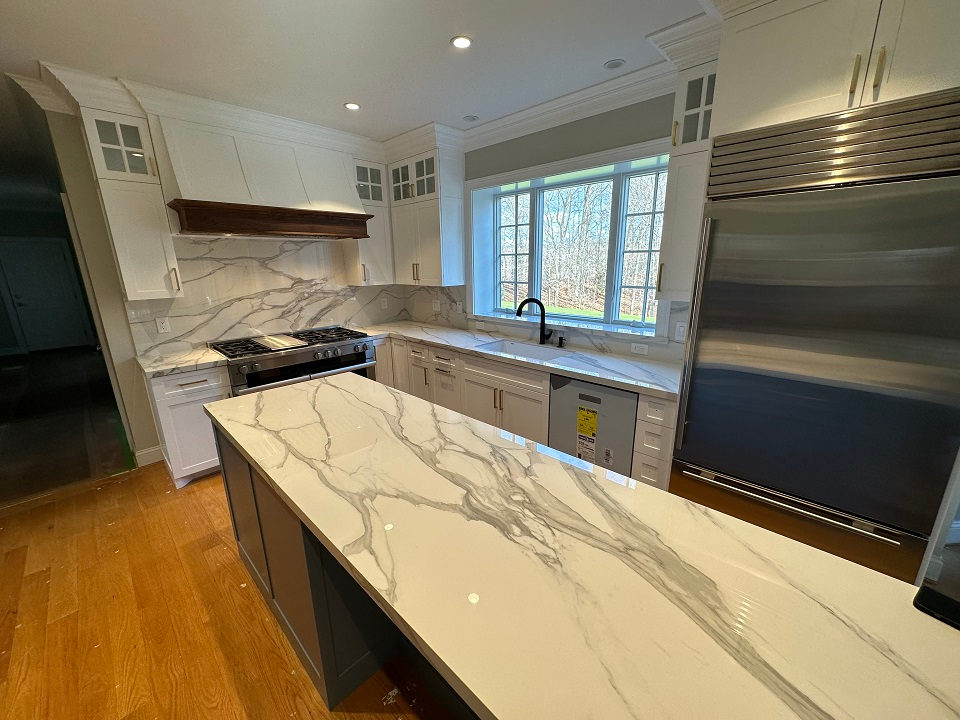
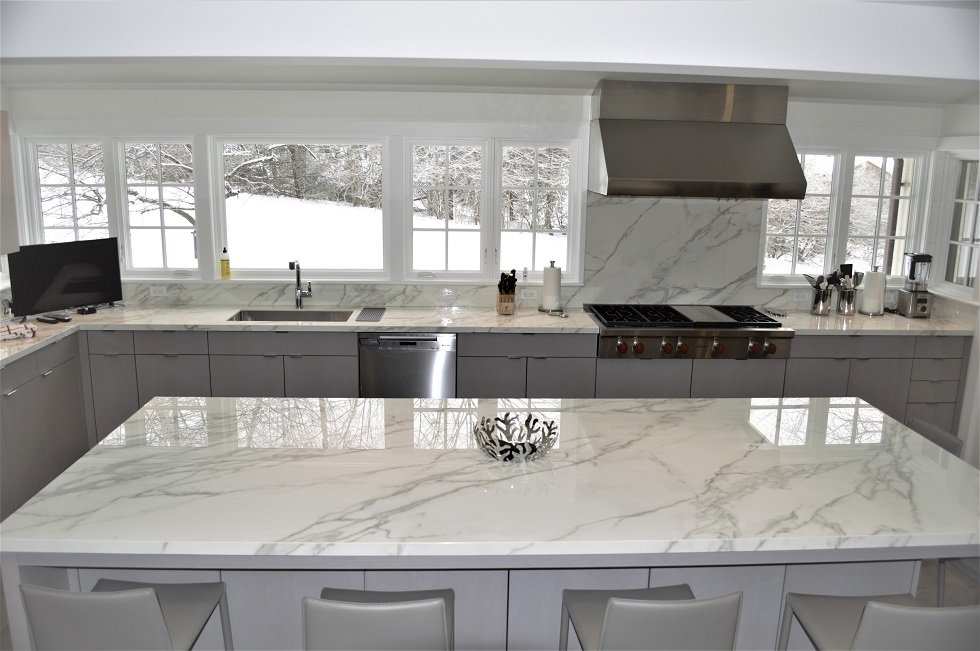
Recent porcelain projects.
Large-format porcelain installed in Connecticut homes by our own crew.
Brands we fabricate
The porcelain and sintered lines we cut.
Click any logo to see what that line offers and how we handle it. Bring us a sample or a slab number from any of them and we’ll quote it.

Porcelain questions
Asked and answered.
What are porcelain and sintered surfaces?
Large-format, remarkably thin ultracompact slabs such as Neolith, Dekton, Laminam, and Sapienstone. Non-porous, and resistant to heat, chemicals, scratches, and UV, so the color never fades, even in full sun.
Can porcelain countertops go outdoors?
Yes. UV resistance is the difference: outdoor kitchens that ignore New England weather are one of the main reasons people choose it.
Why does the fabricator matter so much for porcelain?
Porcelain does not cut like granite. It is thin, hard, and unforgiving of shortcuts: openings need rounded corners, edges are mitered and bonded, and slabs move on frames. Ours is cut in our own shop on equipment set up for it.
Where do porcelain slabs shine?
Full-slab shower walls with almost no grout lines, outdoor kitchens, and wall cladding in any style from marble-look to raw concrete.
More: All questions · Guides on the blog
Planning outdoors or a shower?
Ask us if porcelain is the right call.
Sometimes it is, sometimes natural stone serves better — we’ll give you a straight answer either way. Estimates are free.